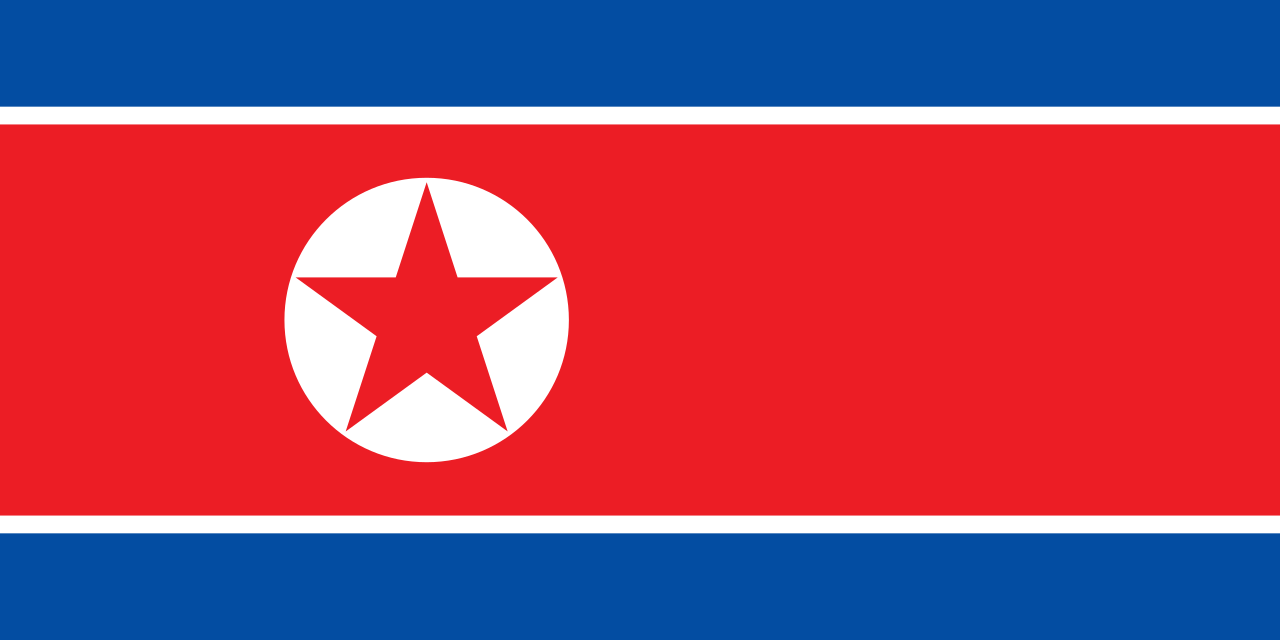
Kim's Unwavering Nuclear Posture and Conditional Overture
The Democratic People's Republic of Korea (DPRK), under the steadfast leadership of Kim Jong Un, has recently articulated a profoundly assertive and potentially transformative vision for the us north korea future. Amidst escalating regional tensions, Kim has publicly declared his nation's firm intent to not only maintain its existing nuclear arsenal but also to significantly expand its inventory. This declaration, made during the Ninth Congress of the Workers' Party of Korea, signals a pivotal moment, asserting Pyongyang's nuclear status as a non-negotiable reality.
In a striking overture, Kim Jong Un presented a clear, albeit conditional, path for renewed dialogue with Washington. He stated that if the United States would "respect our present nuclear position as stipulated in the Constitution… and withdraw its hostile policy… there is no reason why we cannot get along well with the United States." This statement lays bare the core demands: an acknowledgment of North Korea's nuclear power status and the cessation of what Pyongyang perceives as antagonistic US policies. Kim framed the choice starkly for the US: "Whether it’s peaceful co-existence or permanent confrontation, we are ready for either, and the choice is not ours to make." This ultimatum underscores a strategic shift, forcing Washington to directly address North Korea on its own terms, fundamentally reshaping discussions about the us north korea future.
This bold stance challenges decades of international diplomacy aimed at denuclearization. Instead of offering to negotiate away its weapons, Pyongyang demands their recognition as a sovereign right. For the US, this poses a significant policy dilemma: how to engage with a nuclear North Korea without legitimizing its illicit weapons program? The implications for global non-proliferation efforts are substantial, as other aspiring nuclear states might view this as a successful precedent for extracting concessions.
The Severance of Inter-Korean Dialogue and Independent Path
Perhaps the most significant and immediate consequence of Kim's recent declarations is the definitive and seemingly permanent freezing out of South Korea from any future dialogue with the DPRK. Kim explicitly ruled out any change to the policy declared in November 2023, officially terminating all communication with Seoul. Going further, he designated the South Korean state as the DPRK’s “most hostile entity,” vowing to “permanently exclude Seoul from the category of compatriots.”
This radical shift signals an end to the long-held aspiration of inter-Korean reconciliation as a precursor or parallel track to US-DPRK negotiations. Kim's message is unequivocal: South Korea should "give up everything related to us and leave us alone." As one DPRK specialist observed, this is a clear "intention to pursue relations with the US independently, without going through South Korea." This unilateral decision effectively brings to an end the era of multilateral talks, such as the Six-Party Talks, which historically involved the US, the two Koreas, China, Japan, and Russia. The future of any us north korea future engagement, by Pyongyang's design, will be strictly bilateral.
Implications for Regional Dynamics:
- For South Korea: Seoul faces an unprecedented challenge, being sidelined in discussions that directly impact its security. This could lead to increased military vigilance, calls for stronger US security guarantees, or even a re-evaluation of its own defense capabilities.
- For the US-ROK Alliance: Kim's strategy aims to drive a wedge between Washington and Seoul. The US will need to carefully navigate this, reaffirming its commitment to its ally while exploring any potential pathways for dialogue with Pyongyang.
- For Regional Stability: The exclusion of South Korea simplifies, yet isolates, the diplomatic playing field, potentially raising the stakes for direct US-DPRK confrontations or agreements, without the moderating influence of other regional partners.
This strategic move by Pyongyang fundamentally alters the diplomatic landscape, forcing Washington to consider an independent approach to the Kim Jong Un's Terms: The Future of US-North Korea Dialogue, separate from its long-standing alliance with Seoul.
The Enigma of Pyongyang's Nuclear Advancement
Underpinning Kim's assertive diplomatic posture is his unwavering commitment to advancing North Korea's nuclear capabilities. The DPRK leader has emphatically stated his intention to not only hold onto the weapons it possesses but also to "press on full-speed ahead with Pyongyang’s nuclear programme." His directives are clear: "We will focus on projects to increase the number of nuclear weapons and expand nuclear operational means." State media, KCNA, has lauded Kim's leadership for "radically improved" war deterrence, with nuclear forces as its pivot.
Despite these bold claims, the true state of North Korea's nuclear program remains one of the world's most closely guarded secrets. Experts on nuclear weapons development are largely divided on the exact extent of Pyongyang's progress, particularly regarding its ability to "weaponize" nuclear warheads effectively atop a missile and deliver them reliably to a target. The isolated nature of the DPRK, coupled with a pathological security regime that controls nearly every aspect of daily life, ensures that details about its nuclear arsenal—its size, sophistication, and operational readiness—are an unknowable proposition.
Why This Uncertainty Matters:
- Deterrence Calculations: The lack of precise information makes it exceedingly difficult for adversaries to accurately assess North Korea's nuclear threat, potentially leading to miscalculation or overestimation.
- Arms Control Challenges: Any future arms control or denuclearization agreements would require robust verification mechanisms, which are virtually impossible to implement without transparency from Pyongyang.
- Regional Arms Race: North Korea's ambiguous but aggressive nuclear expansion could spur other regional powers, such as South Korea and Japan, to reconsider their own defense postures, potentially leading to a dangerous arms race.
The opaque nature of North Korea's nuclear program ensures that any discussions about the US-DPRK Future: Kim Offers Co-existence Amidst Nuclear Push will always be shadowed by a degree of uncertainty regarding the actual threat, making policy formulation a complex and high-stakes endeavor.
Navigating the Independent Path: Implications for the US North Korea Future
Kim Jong Un's independent path proposal forces a critical re-evaluation of US foreign policy in Northeast Asia. For decades, Washington's strategy has been predicated on close coordination with Seoul and, to varying degrees, with Tokyo and Beijing, under the umbrella of denuclearization. Kim's demands for direct bilateral talks, predicated on US acceptance of DPRK's nuclear status and the withdrawal of "hostile policy," fundamentally challenge this established framework.
Key Considerations for US Policy:
- Defining "Hostile Policy": Pyongyang's definition of "hostile policy" likely encompasses US-ROK joint military exercises, sanctions, and Washington's general posture towards the regime. Conceding to this would necessitate significant policy shifts.
- The Denuclearization Dilemma: Accepting North Korea as a nuclear state would contradict long-standing US policy and international non-proliferation efforts. It would set a dangerous precedent, potentially emboldening other states to pursue nuclear weapons.
- Alliance Management: Any direct engagement with Pyongyang that bypasses Seoul risks undermining the US-ROK alliance. Washington must find a way to explore diplomatic avenues without alienating its key regional ally.
- Leverage and Incentives: With sanctions largely in place, the US has limited new punitive measures. The challenge lies in finding positive incentives that could genuinely move Pyongyang towards de-escalation without legitimizing its nuclear program.
The us north korea future appears to be at a crossroads. One path involves rejecting Kim's conditions, leading to continued confrontation and a heightened risk of instability. The other involves exploring a new diplomatic paradigm, which might entail difficult compromises and a redefinition of what "success" looks like in relations with a nuclear-armed North Korea. The US President's scheduled visit to China during this period suggests an ongoing engagement with key regional players, but the direct challenge from Pyongyang remains paramount.
Practical Tips for Understanding the Dynamics:
- Monitor Rhetoric vs. Action: North Korea's statements are often for internal and external consumption. Observe if the aggressive rhetoric is matched by concrete actions or if it's primarily a bargaining tactic.
- Track Regional Alliances: Pay close attention to how the US reinforces its alliances with South Korea and Japan, and how China positions itself amidst these developments.
- Consider Internal Motivations: Kim's statements are also aimed at solidifying his domestic legitimacy and projecting strength to his populace.
Conclusion
Kim Jong Un's latest pronouncements mark a significant shift in North Korea's approach to foreign relations, boldly asserting its nuclear identity while demanding a bilateral and conditional engagement with the United States. By sidelining South Korea and explicitly stating his intention to expand nuclear capabilities, Kim has presented Washington with a profound strategic challenge. The us north korea future now hinges on how the United States chooses to respond to this independent path – whether it can forge a new framework for engagement that navigates the complex demands of a nuclear-armed DPRK without sacrificing its long-term goals of denuclearization and regional stability. The choices made in the coming months will undoubtedly shape the geopolitical landscape of Northeast Asia for years to come.